Refrigerator Repair
Sub-Zero Running Constantly and Still Drifting Warm in Denver
- Written by
- Tobias Reinhardt
- Trade
- Refrigeration technician — doors, gaskets and cabinet fit · 9 years in the trade
- Certified
- EPA Section 608 certified
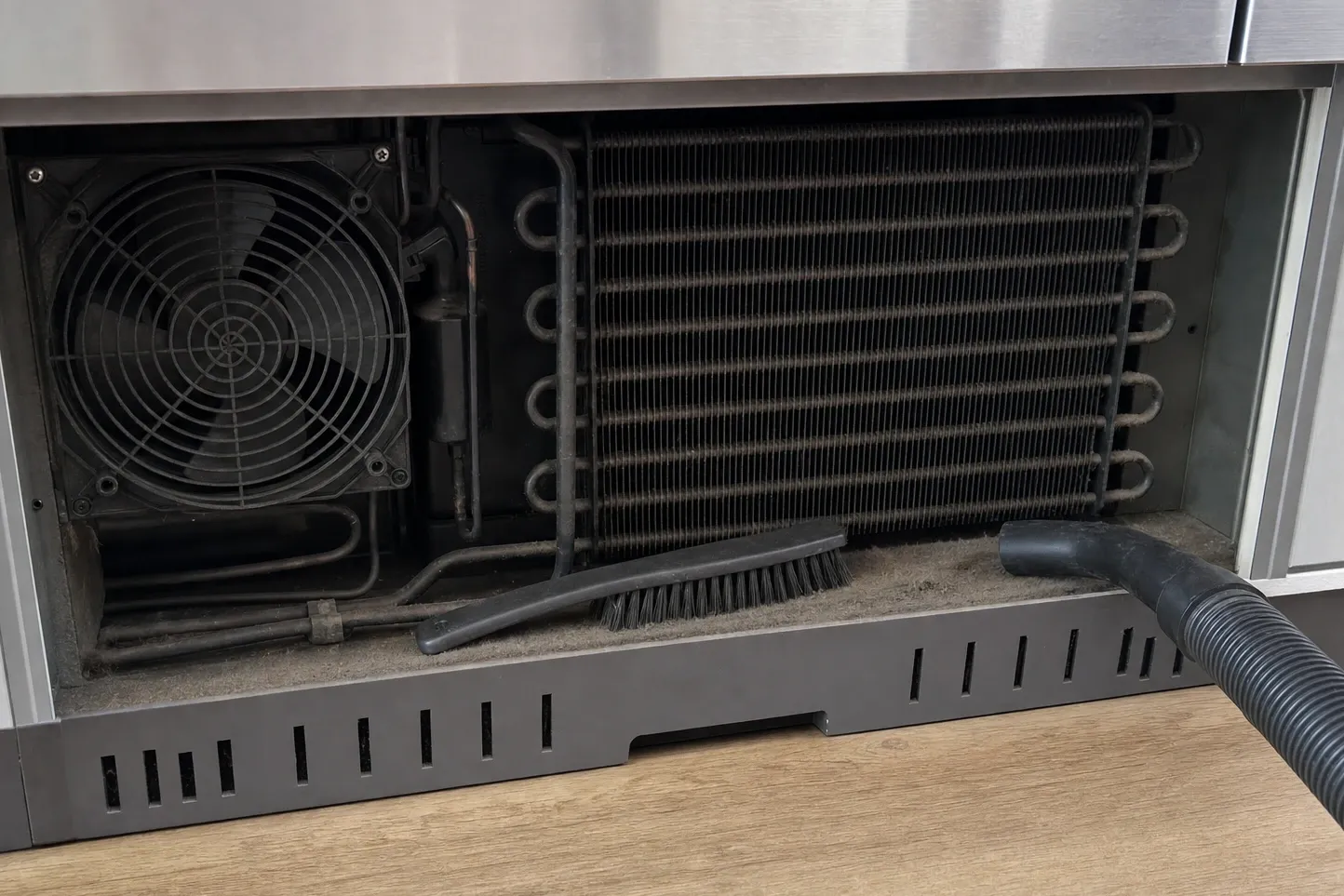
A Sub-Zero that runs all the time and still creeps up in temperature feels like a machine on its last leg. Usually it is not. Almost every version of this call turns out to be a unit that cannot get rid of heat rather than one that cannot make cold — and those two problems live in completely different parts of the cabinet, with completely different bills attached.
Here is how the fault sounds from the outside. The compressor no longer cycles; you notice its absence of silence. The fresh-food compartment sits four or five degrees above where it is set, sometimes recovering overnight when nobody is opening the door. The kick panel or the cabinet side feels warm to the hand. In a Denver kitchen in July, the room around the unit is warm too, and that matters more than most owners expect.
Why heat rejection is the usual answer
A built-in refrigerator makes cold by moving heat out of the cabinet and dumping it into your kitchen through the condenser coil. That coil sits behind the lower grille, in front of a fan. Its whole job is to have air pulled across it.
Block the air and nothing dramatic happens at first. The compressor simply runs longer to shift the same heat. Then longer still. Eventually it is running continuously and the cabinet is losing ground anyway, because the refrigerant is returning from the condenser too warm to do its work. Nothing has actually failed. The machine is being suffocated.
That is why a technician who opens the grille first is not stalling. On this route, the condenser is the first suspect for this exact symptom, and it is the cheapest thing on the list to put right.
The Denver version of the problem
Two local conditions make this worse here than it is in wetter cities.
The first is cottonwood. From late May into June, seed fluff drifts through open doors and windows and gets pulled straight into the condenser by the fan. It does not sit as dust — it mats, felts together and forms a grey blanket across the fins that air will not pass through. A unit that was fine in April can be running flat out by the end of June.
The second is the altitude and the dryness. Air a mile up is thinner, so a given volume of it carries away less heat. It is not a large effect on its own, but it stacks on top of whatever else is wrong, and it means a Denver built-in has less margin than the same model at sea level. Add a west-facing kitchen with afternoon sun on the wall behind the appliance and the margin disappears entirely.
Three other faults that look identical
If the coil is clean and the symptom persists, the shortlist is short.
A failed condenser fan produces the same starvation as a blocked coil, because the air is not moving even though the path is clear. It is often audible as a change in the machine’s note rather than as a noise, and sometimes the fan turns by hand but stalls under load.
A door that is not sealing loads the cabinet continuously with warm room air. In dry Denver winters the gasket is the thing to check: the compound hardens, the magnet cannot pull a stiff seal home, and you get a unit that runs forever holding a temperature it should reach easily. A dollar bill closed in the door should be hard to pull out. If it slides, the seal is the fault.
A low refrigerant charge is the one that actually costs money. The signature is different if you know what to look for: the evaporator frosts unevenly or only partly, and the compressor runs cool rather than hot because it is not doing much work. This is a leak, not a level to be topped up, and it is diagnosed with gauges on the service ports rather than by guessing.
What you can check in ten minutes
None of this needs tools beyond a torch and a vacuum.
- Pull the lower grille and look at the coil. Grey, matted, felted — that is your fault. Vacuum it, then brush along the fins, never across them, and vacuum again. Do not use water.
- Check the fan behind the coil turns freely with the unit unplugged, and that nothing is wound around the hub.
- Give the appliance air. Anything stacked against the grille or the cabinet side is part of the problem; so is a toe panel that was never refitted properly after the last visit.
- Test both door seals with a note or a slip of paper at four points on each door. Any place it slides out freely is leaking warm air.
- Log temperatures with a separate thermometer on a middle shelf, morning and evening for two days. The display is a control reading, not a measurement, and a thermistor that has drifted will report a cabinet it is not actually holding.
If the coil was filthy, give the unit a full day after cleaning before judging it. A cabinet that has been losing ground for weeks takes hours to pull back down.
When it is worth calling someone out
Call if the coil was already clean, if the fan does not turn, if a gasket has gone hard and stiff along an edge, or if two days of logging show the fresh-food side holding above 40°F. Those four answers are the end of what can be checked without gauges and a meter.
The reason not to wait is mechanical rather than commercial. A compressor running continuously against a heat-rejection problem is a compressor running hot for weeks on end, and that is how a condenser cleaning turns into a sealed-system repair. The cheap version of this fault has a short shelf life.
Follow-ups
Is a refrigerator that runs constantly dangerous to leave running?
It is not a fire risk in itself, but it is a compressor working at the top of its envelope for weeks, and that is how a repairable fault turns into a sealed-system job. If the fresh-food side is holding above 40°F, move the perishables and get it looked at rather than waiting to see whether it settles.
How often does a Denver condenser actually need cleaning?
Twice a year is realistic here — once after the cottonwood drops in June and once before winter. Kitchens with dogs or a busy back door need it more often. It is the single highest-value thing an owner can do to a built-in.
Can I tell the difference between a dirty condenser and low refrigerant myself?
Partly. Lint you can see and clear. A refrigerant charge needs gauges on the service ports and a technician reading superheat and subcooling — there is no reliable way to judge it from the outside, and topping a sealed system up without finding the leak just buys a few months.